

1. What is BioMesh rhinoplasty?
Nâng mũi BioMesh là phương pháp sử dụng Sụn sinh học kết hợp với vật liệu tự thân được Hội đồng chuyên môn P:LAB nghiên cứu, xây dựng và chuẩn hóa quy trình, kết hợp nền tảng y khoa với kinh nghiệm lâm sàng chuyên sâu
The procedure has been standardised by the P:LAB Medical Board. Each case is examined in person by a doctor, who designs a bespoke nose shape based on the client's nasal structure and facial proportions. The procedure takes around 60 minutes.
2. Why can silicone-only rhinoplasty lead to contracture and capsular contracture?
When an artificial material such as silicone is placed in the body, the body responds by forming a layer of fibrous tissue around it, called a capsule. This is a normal physiological response. Problems arise when this capsule thickens and contracts over time, leading to:
- Nasal contracture: the nasal tip is pulled upwards, exposing the nostrils and shortening the nose.
- Deviation: the material shifts away from the midline of the nasal bridge.
- Visible implant outline, redness of the nasal tip skin: the skin of the nasal tip gradually thins under prolonged tension.
This risk depends on the individual's constitution, the material, the dissection technique and the degree of skin tension. That is why newer approaches focus on improving biocompatibility, helping the nasal tissue accept the material better.
3. Nâng mũi BioMesh khác nâng mũi silicon thế nào?
| Criterion | Silicone-only rhinoplasty | BioMesh rhinoplasty at P:LAB |
|---|---|---|
| Autologous biological component | None | sụn Fibrin tự thân giúp tăng sinh thích ứng |
| Aim regarding capsular contracture and contracture | Depends entirely on the body's reaction to the material | Aims to improve biocompatibility and reduce the risk of capsular contracture and contracture |
| Nose design | Varies by clinic; some use ready-made shapes | Bespoke design by the doctor based on each person's nasal structure and face |
| Procedure | Varies by clinic | Standardised by the P:LAB Medical Board |
| Procedure time | Depends on technique | Around 60 minutes |
| Warranty | Varies by clinic | Written warranty of up to 10 years under P:LAB policy |
4. Ai phù hợp với nâng mũi BioMesh?
Who should consider it?
- People wanting rhinoplasty for the first time but concerned about long-term contracture or capsular contracture.
- People with a low nasal bridge or short nasal tip who want a higher nose in balance with their face.
- People who have had rhinoplasty before and are experiencing deviation or contracture: they need an examination so the doctor can assess the current nasal tissue before deciding on a course of action.
Who should not have it?
- Women who are pregnant or breastfeeding.
- People with blood clotting disorders or taking anticoagulants that have not been adjusted by a doctor.
- People with inflammation or infection of the nose or sinuses.
- People with poorly controlled underlying conditions.
5. Quy trình nâng mũi BioMesh tại P:LAB
- Examination and nose design: the doctor assesses the nasal structure, skin thickness, facial proportions and the client's wishes to design a bespoke nose shape.
- Health check: tests and medical history taken as required before surgery.
- Chuẩn bị fibrin tự thân của khách hàng để tách fibrin.
- Procedure: performed personally by the doctor in around 60 minutes, in a procedure room meeting sterile standards.
- Monitoring and aftercare guidance: clients are monitored after the procedure and given detailed aftercare instructions.
- Follow-up and warranty: follow-up visits as scheduled; warranty entitlements are set out in writing.
6. Sau nâng mũi BioMesh cần chăm sóc thế nào?
What should you keep in mind?
- Keep your head elevated when sleeping; apply cold compresses as instructed by your doctor.
- Avoid knocks to the nose and do not wear glasses resting on the nasal bridge for the period your doctor advises.
- No swimming, saunas or high-intensity exercise in the early stage.
- No smoking or alcohol; take medication exactly as prescribed.
- Attend follow-up appointments as scheduled.
When should you contact your doctor immediately?
If swelling and pain increase rather than decrease, the nose becomes hot and red, there is discharge or fever, the skin of the nasal tip changes colour or thins, or the nose is visibly deviated.
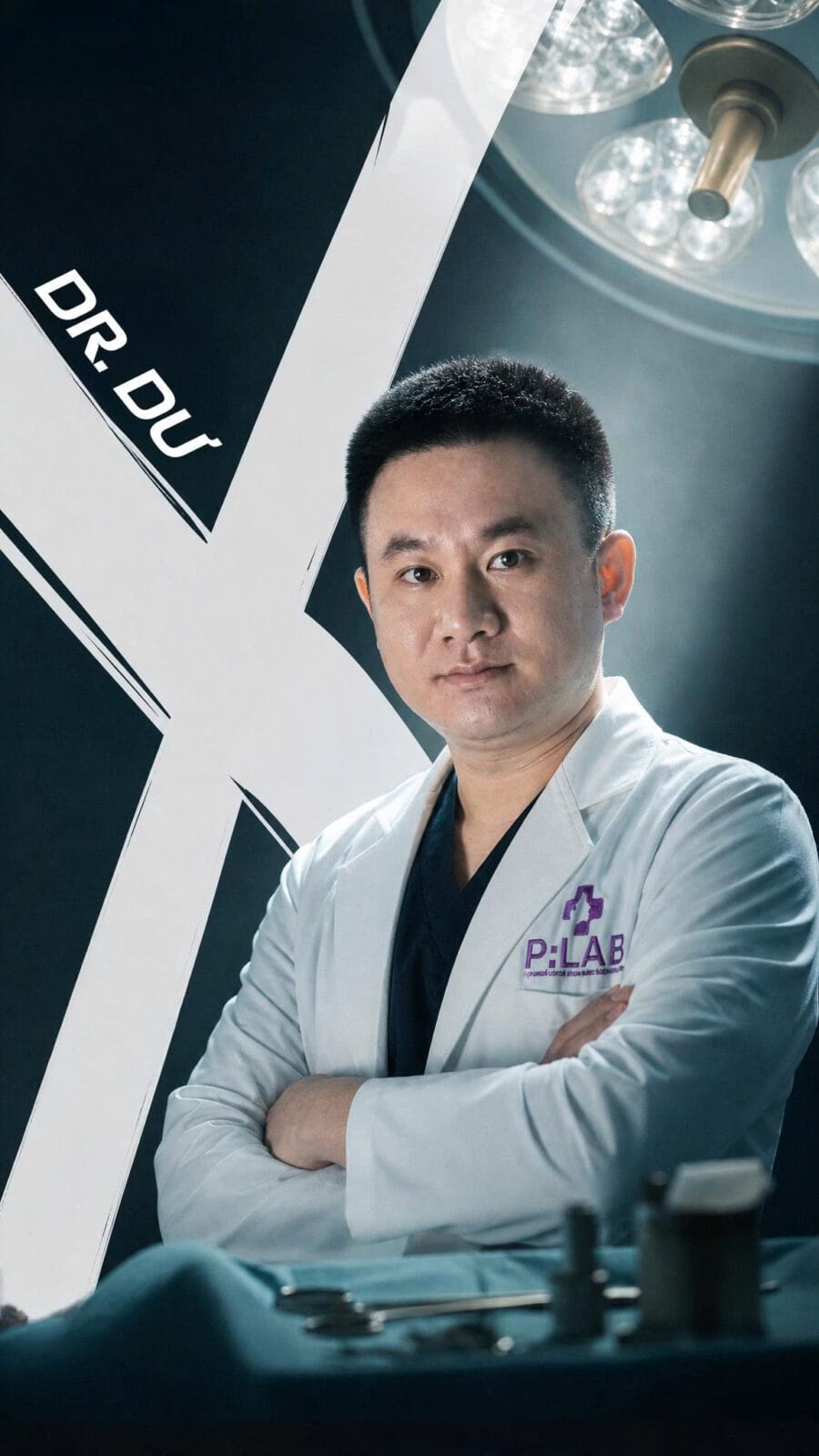
7. Bác sĩ Nguyễn Văn Dư – bác sĩ thực hiện nâng mũi BioMesh
Dr. Nguyen Van Du is a surgical specialist holding a practising licence issued by the Hanoi Department of Health, trained in plastic, reconstructive and aesthetic surgery at the Vietnam Military Medical University, and currently works at P:LAB. He specialises in difficult facial surgery cases, particularly revision of failed eyelid surgery after multiple operations, where the tissue has become scarred, adherent and deformed.
His experience in treating damaged tissue shapes how he approaches every operation: careful assessment before choosing a technique, preserving as much healthy tissue as possible, tailoring the technique to each person, and precision in every tissue layer and every suture. With BioMesh rhinoplasty, that principle starts with designing a nose that suits the real structure of each face.
Book an examination and nose design with Dr. Nguyen Van Du
Frequently asked questions
What is BioMesh rhinoplasty?
BioMesh rhinoplasty is a rhinoplasty method standardised by the P:LAB Medical Board, using autologous fibrin separated from the client's own blood to improve biocompatibility and aiming to reduce the risk of contracture and capsular contracture.
Does BioMesh rhinoplasty cause contracture?
No rhinoplasty method completely eliminates the risk of contracture. BioMesh aims to reduce this risk with autologous fibrin, combined with an appropriate nose design and precise technique. The doctor will assess your specific risk during the examination.
How long does BioMesh rhinoplasty take?
The procedure takes around 60 minutes. The nose shape settles gradually over the following weeks and months, depending on each person's constitution.
Is BioMesh rhinoplasty painful?
The doctor administers anaesthesia as indicated, so clients feel limited pain during the procedure. Afterwards there may be swelling and tightness for the first few days, and the doctor will prescribe pain relief if needed.
How long is the warranty for BioMesh rhinoplasty?
P:LAB provides a written warranty of up to 10 years. The scope and conditions of the warranty are set out in the document given to the client.
Where can I have BioMesh rhinoplasty?
At P:LAB, 88 Mễ Trì Hạ, Từ Liêm Ward, Hanoi (Operating Licence No. 4290/HNO-GPHĐ issued by the Hanoi Department of Health). Hotline 1900 989 904.